
Allen-based Print3D Technologies brings 3D printing innovation to homebuilding
Lance Thrailkill, co-founder of Print3D Technologies, is looking to bring innovation, efficiency and affordability to the homebuilding process.
Lance Thrailkill, co-founder of Print3D Technologies, is looking to bring innovation, efficiency and affordability to the homebuilding process.

Lance Thrailkill, co-founder of Print3D Technologies, is looking to bring innovation, efficiency and affordability to the homebuilding process.Print3D Technologies, which was established in 2023, is using 3D printing technology to build what Thrailkill calls “superior structures.”
The overview
Thrailkill is the third-generation owner of Allen-based All Metals Fabricating as well as a serial entrepreneur, he said. His interest in the homebuilding sector came from personal experience in building and remodeling his own homes, as well as an experience living in a home with mold damage.“[I] have had a lot of exposure to how inefficient the homebuilding industry is in contrast with precision manufacturing where we're automating everything,” he said.
Thrailkill partnered with Craig Pettit to launch Print3D Technologies. Pettit had previous experience in using 3D printing technology in the homebuilding sector, Thrailkill said, and the partnership paired Pettit’s experience with Thrailkill’s resources through the All Metals Fabricating manufacturing facility.
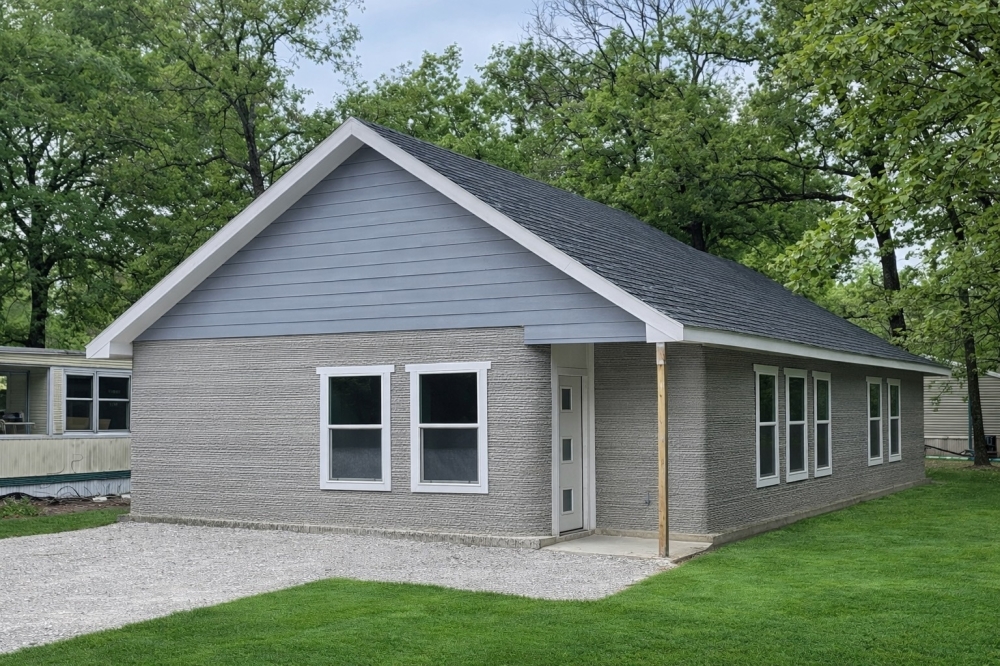
Using 3D printing technology, the duo built their first house for $103,000. Thrailkill said the project was an example of how affordable the homebuilding process can be using their technology.
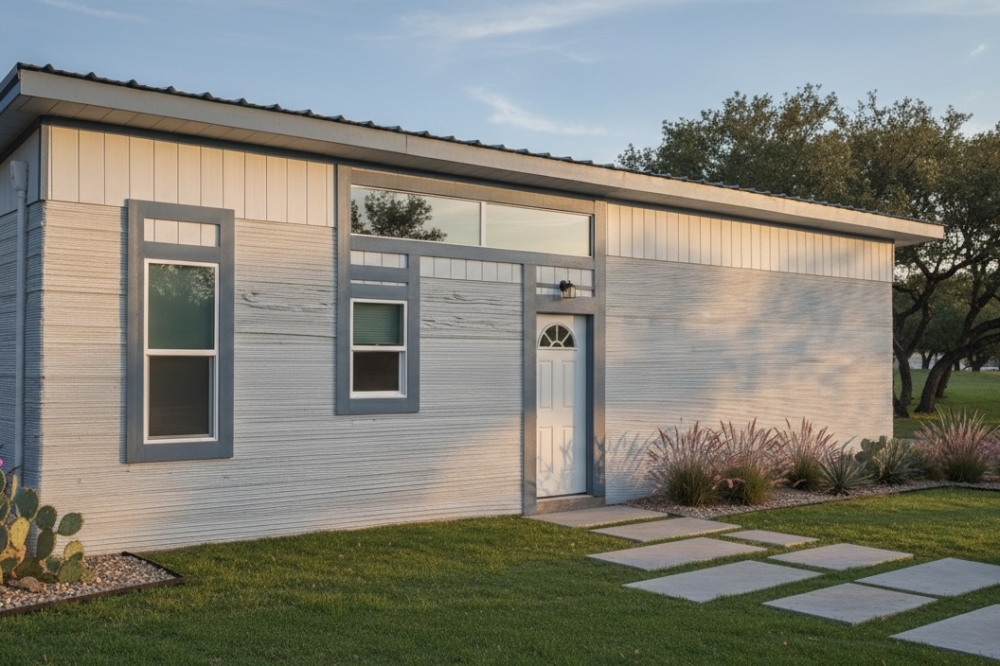
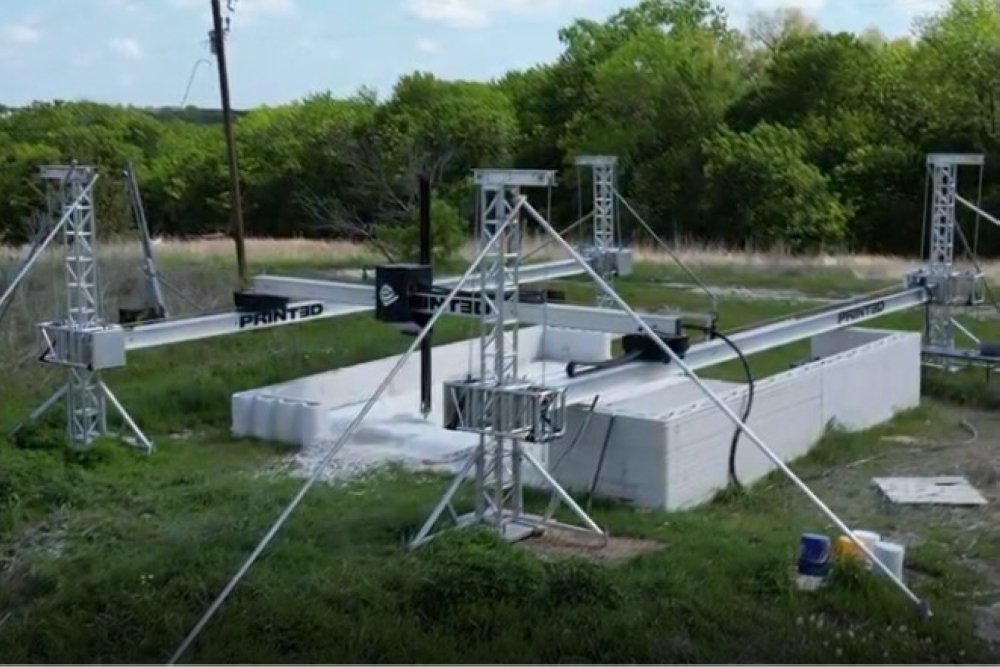
In addition to building homes, the company also designs, manufactures and sells their own 3D printing equipment, according to the company’s website.
“For the past year, we've been raising capital, looking to scale the business, bring in outside investment to help grow the business and prepare for mass adoption of 3D printing,” Thrailkill said.
Diving in deeper
Most people are familiar with 3D printing in a plastic medium, Thrailkill said, and as a result, a common misconception is that the homes are printed using plastic. While a variety of materials can be used in 3D printing applications, the company uses a cement-based material to build homes.
“You're getting a house that is a fortress compared to a toothpick home,” Thrailkill said.The homebuilding process is 30% faster when using automated concrete wall printing, which can also reduce construction costs by over 10%, the company’s website states. Because of the cement-based material used, the structures are also resistant to mold, termites, fire, strong winds and storms, Thrailkill said.
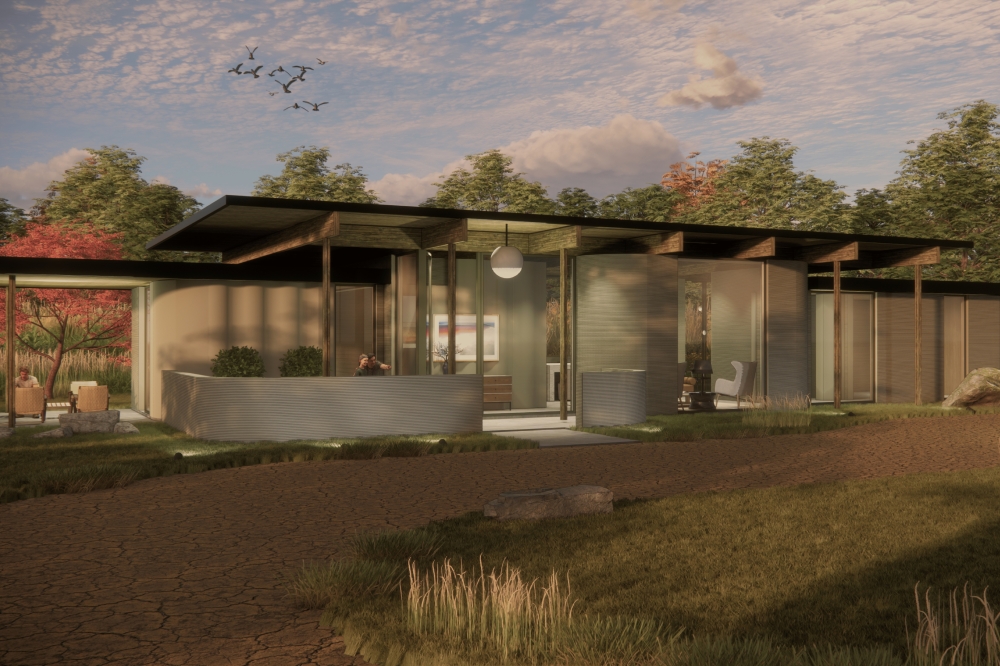
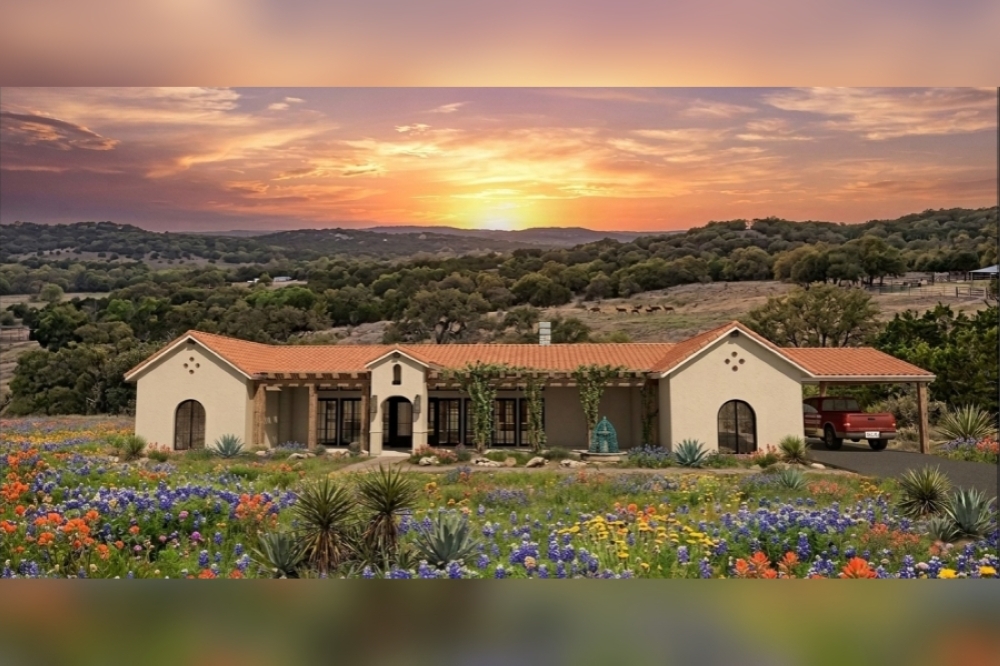
The company has built seven structures so far, including three houses as well as a 16-unit storage facility. Upcoming projects include some higher end custom builds around North Texas as well as the first 3D printed home that will feature a Mediterranean architecture style, which is slated for Lampasas, Texas, Thrailkill said.
“We want to showcase that this doesn't just have to be some modern architecture [and] very cold-feeling structures,” he said. “We want to be able to showcase that it can do any style [of] architecture.”
Quote of note
“You're getting a better structure that ... will last longer, and for an equal or lesser price that has the ability to scale and really impact the affordability of housing through supply and demand,” Thrailkill said.
Growing challenges
As the company continues to grow, Thrailkill said a challenge for the development of 3D printed homes is complying with city codes for homebuilding. Many cities don’t have a process in place to be able to inspect the home building plans or the printed structure of a 3D printed home, he said.
As a result, the company has focused efforts on building structures in areas outside of city limits, but Thrailkill said he is looking to find cities that are interested in collaborating to bring the development within city limits.“
This is my challenge to the [Dallas-Fort Worth] metroplex. ... Here in your own backyard, we've got a 3D printing company that is ready to make an impact,” he said. “Who's going to step up and partner with us?”
The impact
As the need for affordable housing grows, automating construction is a solution for the rising demand, Thrailkill said. The wall structure of homes built by Print3D Technologies can be printed in days, he said, and is followed up by finish out of the home.
“We're solving for building better structures at a lower price per square foot, but the only way to truly solve it is by having supply be able to meet demand,” he said. “You can only do that by automating construction.”
While Thrailkill says he expects the company to continue to work in the affordable housing sector, his plans also include partnering with builders and selling systems and solutions that automate every part of the homebuilding process through the integration of agentic automated intelligence.
“This technology is for every homebuilder,” Thrailkill said. “People want to think, ‘Oh it's just for inexpensive homes,’ but the reality is that you're building a superior structure, so it's great for high-end residential as well.”
The automation of the homebuilding process will enable increased capacity and larger output, which Thrailkill said will support jobs.
“None of this is a desire to replace humans. Humans are why I do what I do,” he said. “We're in the business of serving people with excellence. ... But the reality is, we have a massive ... skilled labor shortage, and the only way to overcome that is through automating.”
- 200 Allentown Parkway, Allen
- www.print3dtechnologies.com